
Geotechnical Investigation for Bulk Water Supply Pipeline – Ward 21 Pipeline and Reservoirs in Jozini Local Municipality
Client Name:
uMngeni-uThukela Water
Consulting Engineers:
SDM-FLUX JV
Project Summary:
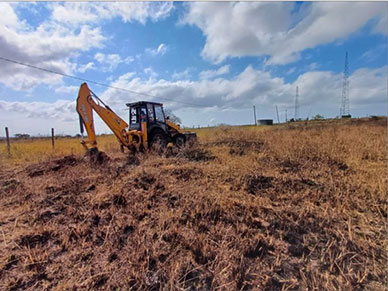
A geotechnical investigation to support the construction of a bulk water supply pipeline, reservoirs, and a pump station was conducted in Ward 21 of the Jozini Local Municipality. The goal was to assess soil and rock conditions to inform safe and effective construction practices. The investigation included test pit excavations, soil sampling, laboratory testing, and Dynamic Cone Penetrometer (DCP) testing. The findings revealed variable soil profiles, shallow bedrock in many areas, and provided specific recommendations for excavation, foundation design, and material use to mitigate geotechnical risks.
Key Services Provided:
- Desktop study of the project area
- Geotechnical investigation including test pit excavation and profiling
- Dynamic Cone Penetrometer (DCP) testing
- Soil sampling and laboratory analysis
- Geotechnical reporting with results and recommendations
Problem and Solution
Initial Problem:
The client needed to understand subsurface conditions to design and construct a water supply pipeline, reservoirs, and a pump station in geotechnically variable terrain with potential risks including shallow bedrock, collapsible soils, and seasonal groundwater seepage.
Solution Provided:
A detailed geotechnical investigation was conducted across multiple sites, identifying soil types, bedrock depths, and material properties. The team provided tailored recommendations for excavation, foundation design, and material use, ensuring the structures would be built on stable ground and using suitable imported materials where necessary. This proactive approach minimised construction risks and supported the successful implementation of the water supply infrastructure.
High Quality Images
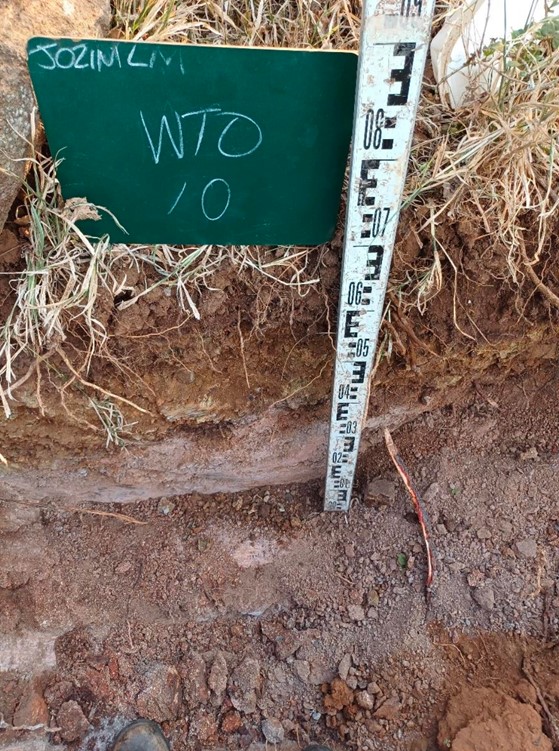
Trench Excavation in Ward 21
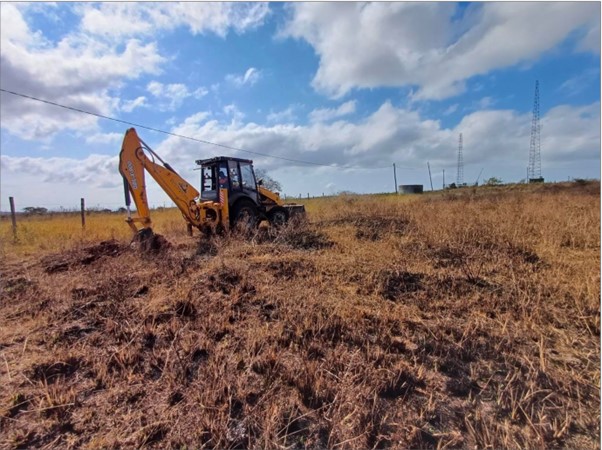
Pit Excavation in Nkangala

Geology Map – Ward 21
Conclusion:
Based on the geotechnical investigations, the proposed reservoir and pipeline sites were found to be suitable for construction, though they presented varied challenges. The Majozini and Machibini Reservoirs and large pipeline sections were underlain by shallow, competent bedrock or very dense soils with excellent bearing capacity (>480 kPa), though excavation required mechanical breaking or blasting. In contrast, areas such as the Nkangala Reservoir site featured softer, compressible, and erodible soils that were unsuitable for use as backfill, necessitating their removal and replacement with imported material.
A key favourable finding across all sites was the absence of groundwater during the investigation, which reduced immediate stability risks. Construction was therefore deemed feasible but required a tailored approach: structures were to be founded directly on shallow bedrock where possible, while engineered solutions such as raft foundations or imported stabilised fill were recommended in areas with poorer soils to ensure long-term stability.